THCA Diamonds for Sale Online: Pricing, Lab Reports, and Red Flags
Buying THCA diamonds online can feel straightforward until it isn’t. The product page looks clean, the photos are crisp, and the price may even look “too good.” Then you wait for the package, open it up, and you’re left asking the same questions most buyers ask eventually: Is this really what the label says, does the lab report match the batch, and why do two listings with similar wording end up costing wildly different amounts?
I’ve handled plenty of “pretty rocks,” and I’ve also seen diamonds that crumble like sugary glass or terpenes that smell promising but vanish as soon as you heat them. The difference usually comes down to consistency, transparency, and how seriously the seller treats lab reporting. If you’re shopping for thca diamonds for sale online, or you’re searching for diamonds thca and wondering what a fair deal looks like, this guide is built to help you read between the lines without turning the process into a science project.
What THCA diamonds are supposed to be
THCA diamonds are best thought of as a highly concentrated, crystalline form of THCA. In practical terms, you’re buying a solventless-style extraction endpoint that is meant to be mostly crystalline with minimal residual material. Depending on the product type and the seller’s process, you might see them marketed as “diamonds,” “crystals,” or “diamond sauce” when they’re blended with more aromatic compounds.
A key nuance: “diamonds” does not always mean the same texture or purity across brands. Some sellers lean toward hard, clear crystals. Others sell a more cloudy, more broken-up grain that still tests high but behaves differently when you dab it. Even within one brand, variation can happen based on starting material, how the crystallization is run, and what gets blended back in.
If you’re looking specifically at thca liquid diamonds, you’re usually dealing with a different presentation. “Liquid diamonds” commonly implies a higher liquid fraction, often with crystals suspended or partially dissolved in a terpene-rich component. That can be excellent for flavor and a more forgiving dab consistency, but it also changes what you should expect from the lab report. You will want to understand how they’re measuring cannabinoids and whether the terpene content is even claimed, since many listings focus on potency while treating aroma as an afterthought.
Pricing: why diamonds can swing so much
The most common question I hear from people searching for best thca diamonds is, “Why is this one $X and that one is $2X?” Sometimes the answer is simple: one seller is pricing for premium appearance and packaging. Other times, it’s more complicated.
Here are the pricing factors that most often drive the spread:
Purity and cannabinoid concentration. If a listing claims high THCA levels, the effective cost per gram at the dabbing level matters. A product that tests at a genuinely higher THCA percentage can be more economical even if the sticker price feels steep, because you need less to reach the same effect.
Batch size and frequency. Small batches tend to carry higher per-unit costs. If a shop restocks often with new COAs, it usually means they are either running frequent batches or they are selling through quickly. Either way, fresh lab documentation often costs more to maintain.
Terpene and flavor strategy. Diamonds marketed for flavor might include a terpene-rich fraction. If the “diamonds thca” listing includes meaningful aromatic profile claims, that component can raise cost. Conversely, a seller who focuses on maximum crystal purity with minimal extras might price lower, even if the THCA number looks similar.
Packaging and “presentation tax.” Clear jars, good seals, humidity control, and professional labeling can add costs. Some buyers care, some don’t. The risk comes when presentation masks weak product quality.
Geography and compliance costs. If you’re trying to find thca diamonds near me, you might notice local pricing changes based on distribution routes, compliance fees, and how quickly products move through retail. Online pricing often looks cheaper, then you add shipping, taxes, and potential delays.
A practical way to compare prices without getting fooled
When I’m comparing listings, I avoid thinking in terms of “grams” only. I think in terms of “how much THCA am I actually paying for.”
If a COA clearly reports THCA percentage and the listing price is clear per gram, you can roughly estimate value. Even if you don’t calculate it perfectly, look for consistency: a product priced higher should usually show higher reported THCA concentration or a clearly better lab story (same batch details, same date, credible test panels). If the higher-priced option has the same THCA claim but vague lab details, you should treat the price premium as questionable.
Lab reports: what to check and how to spot a mismatch
Online listings live or die by the lab report. Unfortunately, lab reports can also be the easiest part to fake, misquote, or accidentally misalign with the product you receive. The best sellers make it hard to misread their paperwork. The worst sellers make it easy to get lost in paperwork that never quite connects to the item in your hands.
The basics that matter in every COA
Even if you’re not a chemistry person, you can still evaluate whether a COA looks legitimate and relevant.
First, confirm you’re reading a COA for the exact product. Look for matching product name or SKU, matching batch or lot number, and ideally matching net weight or package size. If the report references a different variant, different cannabinoid profile category, or an ambiguous sample name, it’s a red flag.
Second, check whether THCA and other cannabinoids are reported clearly. A strong COA presents cannabinoid results in a way that a normal buyer can interpret: THCA value, total THC estimate (sometimes displayed), and other major cannabinoids. If the COA is hard to interpret or the THCA number is missing or buried, you’re not getting transparency.
Third, look for contamination panels where appropriate. Cannabinoids are only one side of the equation. Dabs are concentrated by nature, so buyers should be cautious about residual solvents, heavy metals, pesticides, and microbial contamination. The exact test panel can vary, but the absence of any real testing detail, or the presence of testing that doesn’t align with the claim, should make you hesitate.
Finally, confirm the COA has a reasonable date and ties back to the batch. Products can change over time, especially when stored inconsistently. If a listing uses an old COA as if it still applies, you should assume the lab results may not represent what arrives.
A quick example of what “matching” looks like
Say a listing says “THCA Diamonds 1g, batch 24-07-18.” The COA should show that batch identifier. The sample name and producer or processor information should align with the seller’s description. If the jar label says something else entirely, like “crystals 3g, lot 22-11,” the COA is not your friend. It may still be real, but it might not apply to your batch.
Red flags that show up in real shopping
Let’s talk about the things that most consistently correlate with disappointing purchases. None of these are guarantees of bad product, but they are patterns worth respecting.
Red flag 1: lab reports that don’t connect to the batch
The most common problem is a COA link that exists, but the details are too generic to be meaningful. If you see a report with no batch identifiers, or the report looks like it was generated for a different form of product, you’re taking a gamble.
This matters even if the THCA number looks amazing. For example, a seller might list “diamonds thca” with a high THCA result, but the COA could be for a different concentrate type or different cannabinoid blend. Crystals can form in multiple ways, and different starting material can change everything from crystal structure to contaminant profiles.
Red flag 2: “too perfect” photos with no storage or packaging clarity
High-resolution photos can be fine. The problem is when photos are flawless and everything else is missing. Good sellers usually provide basic product handling information and clear packaging descriptions, like how the product is sealed, whether it’s vacuum-packed, and how it’s protected from heat and light during shipping.
If you keep seeing the same stock image reused across batches, assume the listing is more marketing than traceability. That doesn’t mean the product is automatically terrible, but it does mean you have fewer signals to trust.
Red flag 3: inconsistent labeling and cannabinoid language
Watch for vague cannabinoid claims like “high THC” when the product is marketed as THCA diamonds. THCA and THC are different, and while conversion can occur with heat, mixing the messaging tends to create confusion. A professional listing should align the cannabinoid type with what the COA supports.
With thca liquid diamonds, this gets even trickier. Sellers might imply “liquid potency” without giving a clear breakdown of THCA and other components. If the marketing emphasizes effect more than measurements, you’re being encouraged to buy on vibes instead of data.
Red flag 4: pricing that ignores the math of concentration
If a listing claims very high THCA potency and also sells at a rate that looks impossible compared to similar products with real COAs, you should pause. Sometimes there’s a legitimate reason, like promotions or first-time buyer discounts. But persistent underpricing paired with weak lab traceability is a pattern I treat as a gamble.
Red flag 5: no straightforward access to the COA
Some sites hide the lab report behind multiple clicks. Others only provide it after you contact support. If the COA is not easily accessible, the seller is making you work to verify what you’re buying. In my experience, reputable sellers do not require extra effort to prove compliance.
How to evaluate a listing like you’ve got options
If you’re searching for thca diamonds for sale online, you can take a buyer’s approach: compare multiple listings, don’t fixate on one. When you compare, you start noticing the differences in how sellers behave.
Here’s the mindset I use when deciding whether to pull the trigger.
What I look for first
In the beginning, I focus on traceability and clarity, not aesthetics. If I cannot quickly find a COA that matches the batch, I don’t spend time debating the crystal looks. If the lab report is clear, then I look at reported THCA concentration, and only then do I consider how the product is presented.
If you’re deciding between “diamonds” and “liquid diamonds”
This is where buyers often get disappointed because they expected one experience and got another. Solid crystals tend to dab differently than more liquid, terpene-forward blends. With thca liquid diamonds, you may get a smoother first hit and better aroma, but you might also see less “rock hard” crystallization.
If your priority is maximum “diamond” texture, prioritize listings that clearly emphasize crystalline content and show THCA results consistent with that. If your priority is flavor and an easier dab consistency, liquid-style products may be better, but demand a COA that still matches the batch and still includes the contamination panel details you care about.
Storage and handling: the unglamorous part that affects quality
A perfect product can still turn mediocre after poor storage. Diamonds and crystals are stable compared to many extract forms, but they are not immune to heat stress and oxidation, especially when the seal fails or the product spends time in a warm warehouse.
When you receive an order, check two things quickly: whether the jar is sealed properly and whether the product looks consistent with the description. If crystals are unusually wet, smeared, or heavily broken with a sour or off smell, you have to consider whether mishandling happened during shipping.
Also, keep your storage conditions realistic. Avoid leaving concentrate on a warm surface. Keep it in a cool, dark place. I’m not asking for perfection, but I’ve watched buyers store product near a window or over a hot appliance and then blame the seller for a change that was predictable.
The effect question: what to expect without overselling it
People buy THCA diamonds expecting a potent, clean, immediate impact. Many do get that. But it helps to avoid false certainty.
The effect depends on more than THCA percentage. It depends on dose, your tolerance, how you dab, and what else is present in the concentrate. Some diamonds are effectively “nearly pure” THCA with minimal extra compounds, while others include additional fractions that influence how the experience feels.
This is also why the “best thca diamonds” label can mean different things. The best for someone chasing heavy potency might not be the best for someone chasing smoother flavor. If you prefer flavor, don’t just chase a THCA number. Pay attention to how the seller describes aroma, whether the COA supports those claims, and whether the product presentation suggests a terpene-rich fraction.
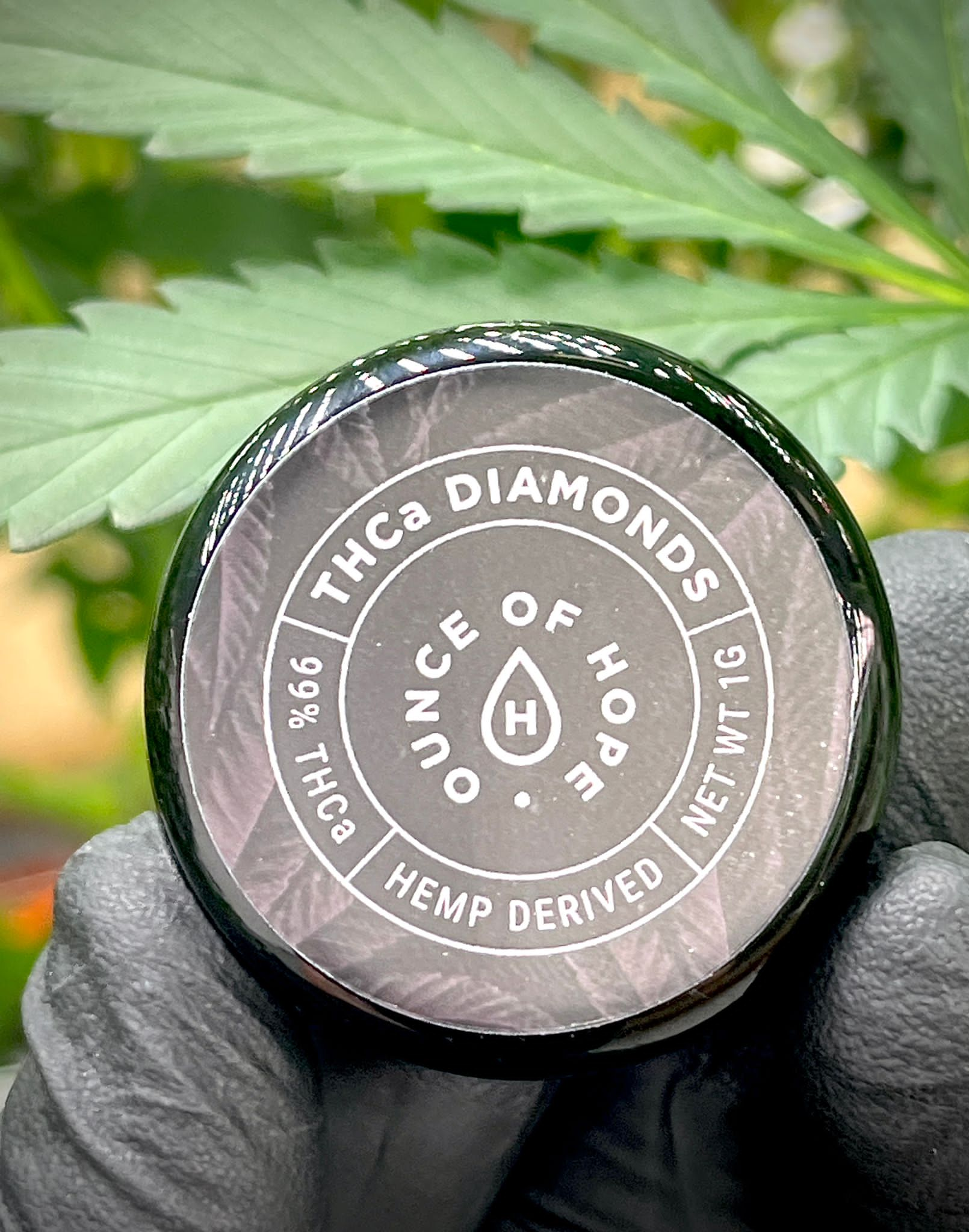
Where “thca diamonds near me” fits into the decision
Searching for thca diamonds near me changes what you can verify. Local buyers may get the advantage of seeing product physically and asking questions in person. You can smell the jar, check the seal, and sometimes get the COA at the counter.
Online buyers can still verify, but it requires a little more discipline. You need to check the COA, match batch info, and accept that shipping introduces heat exposure risks.
If you’re deciding between local and online, I’d weigh it like this: if the online seller has strong batch traceability and you can access the COA easily, online can be just as safe. If the COA story is vague and the listing leans on marketing, the local option may reduce your risk even if the price is slightly higher.
A short buyer checklist before you pay
If you want a quick “do I trust this?” routine, here’s the one I use. It’s not complicated, but it catches problems fast.
- Confirm the COA includes the exact batch or lot number tied to the product you’re ordering
- Verify the COA is accessible without barriers and not replaced by vague placeholders
- Check that THCA and major cannabinoids are clearly listed, not hidden in unclear formatting
- Look for contamination testing panels relevant to concentrated products
- Compare pricing to similar products with comparable THCA claims and credible lab traceability
If you’re going to dab: choose your method carefully
Even without getting medical, it helps to be honest about how concentrate quality shows up at the moment of use. A good diamond can be crisp and satisfying. A rushed, poorly processed diamond can feel harsh, while inconsistent texture can make dosing unpredictable.
How you handle dabbing matters, too. If your method overheats the concentrate quickly, you can burn off more than you intended, dulling flavor and potentially making the hit feel harsher.
Liquid-style products can behave differently. With thca liquid diamonds, the “liquid” fraction can spread and vaporize more quickly, which may change the feel compared to more solid crystals.
I’m not going to tell you what temp to use or how to consume, but I will say this: if you find yourself repeatedly overloading your rig because the concentrate looks “soft,” that’s a product behavior cue. It tells you the texture and consistency are not what you assumed from the photos.
What a credible seller usually does
Credible sellers tend to be boring in the best way. They keep the paperwork clean, they don’t reuse mismatched labels, and they make it easy to verify.
They also tend to accept questions. If you ask a basic one, like “Can you confirm the COA batch matches the jar lot?” a professional vendor doesn’t get defensive or offer a generic screenshot. They either provide the right document, or they admit the product you’re asking about doesn’t have a COA attached in a way they can prove.
One more practical point: if https://ounceofhopetn.blogspot.com/2026/06/blog-post.html a seller consistently updates COAs and the listing includes clear identifiers, that’s a good sign they are running product through a real workflow. If a seller’s entire catalog relies on copy-paste COAs from old batches, that’s when you start assuming risk.
Common shopping scenarios and how I’d handle them
Sometimes the buying decision becomes messy because you’re not comparing just two products, you’re comparing a whole cart of options.
Scenario 1: You found a great deal on thca diamonds for sale online
The price feels better than everything else. Your first move is to look for the COA match. If the lab report is clear and batch-linked, you might have found a true value. If the lab report is generic, the deal is likely priced to compensate for missing confidence. I’d rather pay slightly more for traceability than save a little and risk a mismatched batch.
Scenario 2: You’re torn between “diamonds thca” and “thca liquid diamonds”
If you care about aroma and a smoother dab experience, liquid-style products often deliver. If your priority is hard crystals and a classic diamond texture, solid diamonds may be better. Either way, make sure the COA you review fits the product form you’re buying, not just the brand name.
Scenario 3: You want thca diamonds near me but supply is inconsistent
If you walk in and the inventory changes daily, ask for the COA on the specific batch behind the counter. If they can’t provide it, you’re buying blind. Buying online with a clear batch COA can sometimes be safer than buying locally where verification is informal.
The bottom line on “red flags”
Most red flags are not dramatic. They’re small friction points: a COA that doesn’t quite match, a listing that uses vague labels, a price that looks too perfect, or a vendor that makes you chase documentation. Those small things add up.
THCA diamonds are a category where trust matters because the product is concentrated. You can’t fix that trust gap with a nice photo or a confident description. If the batch traceability is solid, the COA is consistent and accessible, and the listing aligns with what you receive, then you’re buying from the kind of seller who understands the basics of accountability.
If you’re still shopping, use your time efficiently. Pick a few listings, compare their lab traceability, and decide based on evidence rather than expectation. That’s how you end up with thca diamonds that are actually worth the price, whether you’re buying traditional diamonds thca or exploring thca liquid diamonds for a different dab experience.